Demon or Deity · Chapter 4
Inside an Elephant Capture
By Kalyan Varma
Demon or Deity · Chapter 4
By Kalyan Varma
When we read of man-elephant conflict, we agree that "capture" is the most logical solution. But do we know what capturing a wild elephant actually means, what it looks like, what it feels like?
The escalating conflict between man and elephant in Hassan left the authorities with no option but to order the capture. A dozen or so tame elephants were sent to Hassan to assist in the process, and once they reached the venue, it began.
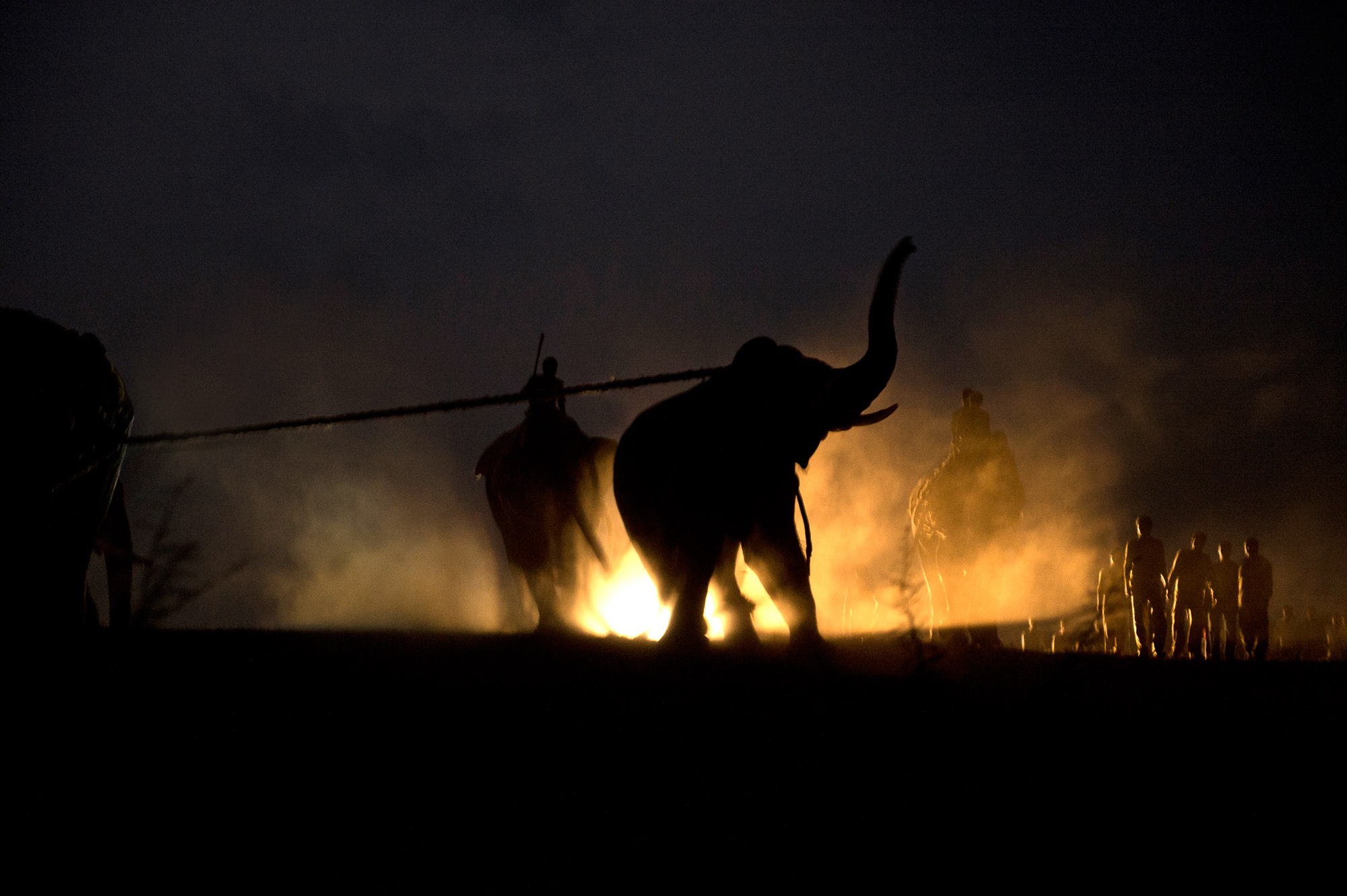
Sharpshooters armed with tranquillisers set out into the forest on foot to track the elephants. At first, they focussed on the males — and when one was found, they brought it down with tranquillisers. Forest officials and their helpers roped up the stunned elephant. The tame elephants then assisted, forced, and coaxed the captive to where the flat-bed lorries waited — a long, tedious procedure during which the wild elephant occasionally collapsed from the stress and the effort of resistance and had to be revived.
Once at the loading zone, the tame elephants acting in concert with the commands from the mahout head-butted the wild elephant from in front, forcing it backwards into the lorry. The procedure is traumatic — for the officials, for the tame elephants, for the wild captive and even for the observer.
When we read of man-elephant conflict and of the lives lost and property damaged, we agree that "capture" is the most logical solution. But do we know what capturing a wild elephant actually means, what it looks like, what it feels like?
This chapter was originally told primarily through film footage — over 20 hours of footage edited into documentary clips showing the full capture operation in graphic detail. The video record is an integral element of this narrative.
The footage documents every stage of a process that is both brutal and necessary: the tracking through dense forest, the dart hitting its mark, the stunned animal going down, the ropes being secured, the tame kumkis straining against the weight of a wild tusker fighting for its freedom, and the final, exhausting loading onto the truck.
It is graphic in its detail. It is also honest. The capture of wild elephants is not a clean or painless process — and for anyone who has read about conflict and instinctively nodded at the word "capture" as the obvious solution, watching it happen is a corrective experience.
Continue reading in Chapter 5, where the capture operation reveals unexpected moments of empathy between wild and tame elephants.